The best of the world leader congratulations | FP Passport.
Some favorite quotes in this piece:
Iranian President Ahmadinejad: the election was a “battleground for capitalists”
CubaSi’s headline: “U.S. elections: the worst one did not win”
The best of the world leader congratulations | FP Passport.
Some favorite quotes in this piece:
Iranian President Ahmadinejad: the election was a “battleground for capitalists”
CubaSi’s headline: “U.S. elections: the worst one did not win”
So, Connecticut fails to mail out a voter information guide with sample ballot. This is something that I think is very unfortunate, spoiled Californian that I am. So where to go for information about the local, state, and national elections? There is no easy answer but below are some of the sources I found in my last-minute quest to inform myself. All of these are (mostly, anyway) unbiased presentations of what the candidates and issues are.
The issue that makes me most irate is that I know there are “Questions” to vote on in this year’s local ballot. But (a) there seems to be almost no media coverage of such things here an (b) unless you go to the registrar or secretary of state’s website, you don’t even know these questions exist! So, you just show up and answer the question?
Should I approve $37 million towards a pump station? Why? Who is for and against this and why?
Should I approve close to $5 million to repurpose a building as a senior center? Why? Who is for and against this and why?
For all of these issues, shouldn’t there be some independent analyst’s impact analysis for such things as budget and the environment? This is what I grew used to receiving on a silver platter in California. How am I–and how is the average voter–supposed to learn about these issues and the trade-offs that are made in voting on them?
Here are the links I promised:
UPDATE: Just noticed that Wesleying mentions the Questions in their post about today’s election. But more analysis would still be useful.
The Middletown CT Patch has a “Middletown Election Guide 2012″. But no mention of the Questions.
Middletown CT Registrar of Voters
The CT Mirror: Good political coverage but not exactly the voter’s guide I was looking for
The Hartford Courant’s Voter’s Guide, which I find rather confusing in layout and not very useful.
Our September issue of the APCG Newsletter is now available. This is our most exciting issue yet!

Volume 8, Issue 2, September 2012
Here are some of the highlights:
Page 2. Symposium: New Directions in Gender and Politics Scholarship: Transforming the Study of African Politics, Guest Editors Gretchen Bauer & Aili Tripp. The symposium includes contributions from Aili Tripp, Kara Ellerby, Chiseche Mibenge, Peace A. Medie, Olajumoke Yacob-Haliso, Alice Kang, and Josephine Ahikire.
Page 13. Review of the Ethnic Power Relations dataset, written by Paul Zachary.
Page 15. Announcement of our award winners, Jaime Bleck (APCG-Lynne Rienner Award for Best Dissertation) and Robin Harding (APCG-African Affairs Award for Best Graduate Student Paper).
Page 16. Statements by candidates for APCG Chair and Treasurer.
Page 19. MPSA Panel Submissions are DUE FRIDAY!
I started to use Twitter a couple weeks ago. Anyone who wants to follow can join me at:
The Princeton in Africa program is accepting applications (see flyer below). Some of our students have had great success with this.
Princeton in Africa Flyer (pdf).
(h/t Evan Lieberman)
Apparently, the UN Association of the USA is calling for applications from youth ages 18 – 25 to be an observer at the UN summit in New York next month. Here is the story (h/t Duck of Minerva):
Be the First Ever U.S. Youth Observer at the United Nations | UN Dispatch.
And here is the advertisement:
http://www.unausa.org/membership/us-youth/us-youth-application
Top ten things that would-be foreign policy wonks should study | Stephen M. Walt.
I’m not convinced that “wonk” is what most students aspire to. But Walt has some decent advice on what kinds of classes to take for those interested in careers in foreign affairs more generally.
#2: Statistics! I keep telling my students to take a statistics or “methods” course. Glad to see this supported here.
#5: International Law: Maybe I should be teaching it more often?
I also like #10: Ethics. Like he says, not the kind of thing you can easily pick-up in a course. However, there are some courses that might help force you to think about these issues. In our department, the political theory courses would be a good place to look.
But I am on sabbatical this fall, so that may be all the course advice I will give!
Saw this on a friend’s Facebook post. I’m not sure the American University has been killed yet, but it is definitely having problems. I can think of some other problems that rank up with those mentioned here, but these points are worth a conversation on their own.
How The American University was Killed, in Five Easy Steps | The Homeless Adjunct.
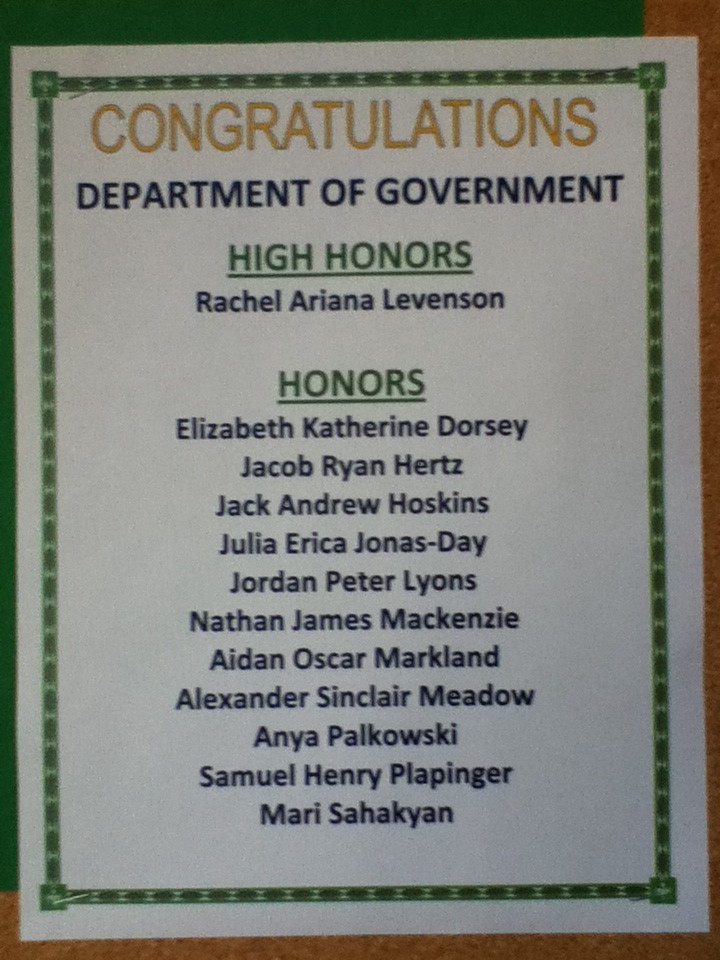
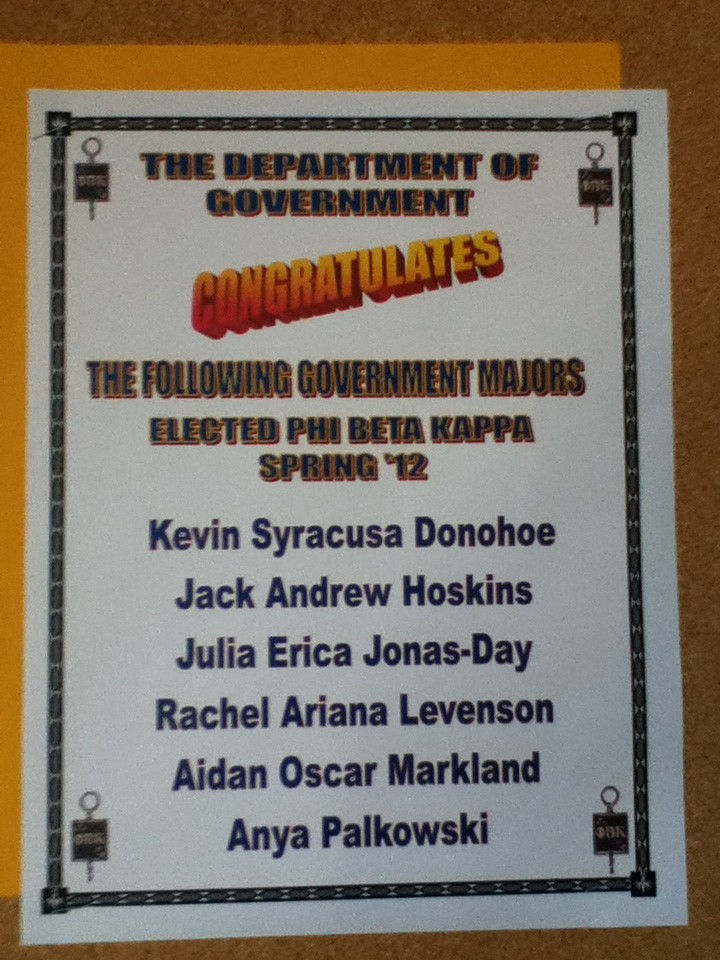
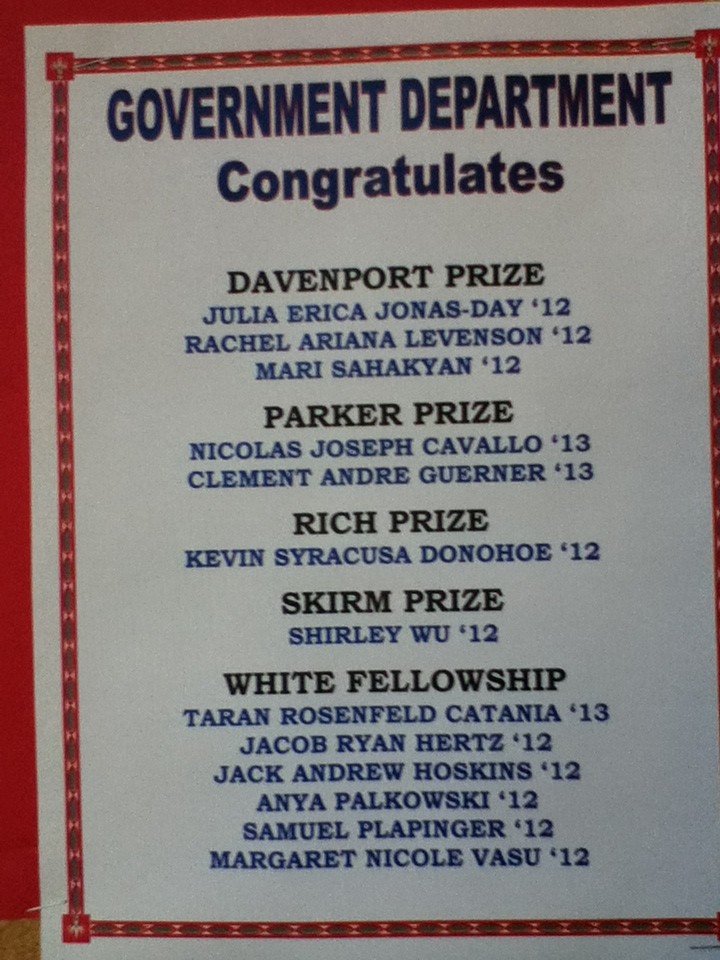
Update: There were some typos on the original flyers.
I just updated my site to include an updated list of the news sites and blog feeds I follow. Much of it — except the major papers like Financial Times, The Economist, and The New York Times — can be accessed via the diagram below (just click on it to go to an interactive page). All of it is available on my new “Links and Feeds” page.

 Michael Nelson
